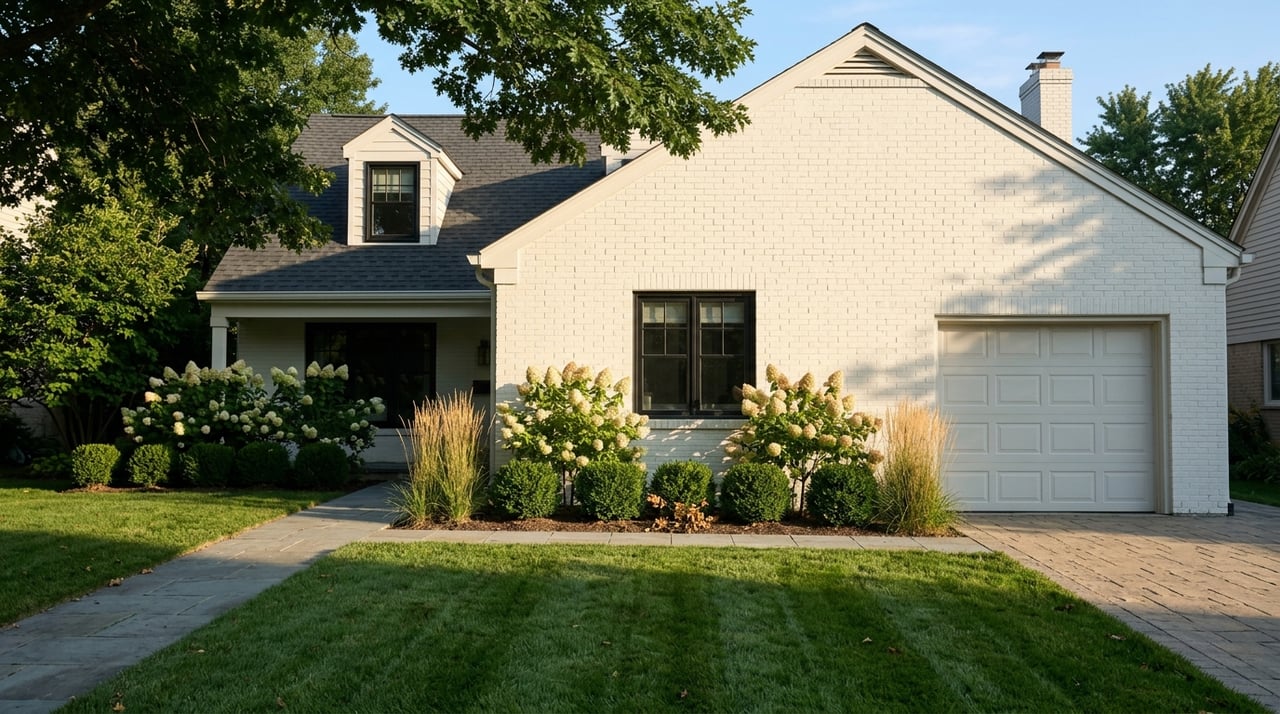
Ask about the Wheaton market right now and you'll get one number back: the median sold price. In May 2026 that number was $566,000, up 10 percent from the month before, with homes going under contract in a median of five days and selling at roughly 103.5 percent of list price. That's a market moving at a sprint.
But if the house you're picturing is a two-bedroom condo a few blocks from the Metra station instead of a detached home on a quiet side street, that sprint isn't the race you're in. Downtown Wheaton's condo-heavy core has seen average sale prices fall close to 15 percent over the same twelve months, even as detached single-family prices climbed nearly 9 percent citywide. Same city, same zip code in many cases, two markets moving in opposite directions.
The gap may have more than one explanation. One possible factor is a 334-unit apartment building under construction two blocks south of the train tracks.
The Median Is Really An Average Of Two Different Speeds
Wheaton's overall numbers describe a market with almost no slack in it. Detached single-family home prices reached $564,500 as of March 2026, up 8.8 percent year over year. By May 2026, months of supply sat at just 1.16, far below the five or six months that typically signals a balanced market, and homes were going under contract in a median of five days. A listing that hits on a Tuesday is often gone by the weekend.
That's the story most people hear when they hear "Wheaton." It's true. It's also only half the picture.
The Condo Corner Of Downtown Is Telling A Different Story
Zoom into the tightly drawn downtown core, the pocket Redfin labels "Center," and the numbers reverse. Average house prices there ran around $300,000 as of mid-2026, down close to 15 percent from the year before. That's not the same geography as the broader 60187 zip code, where average values were still climbing modestly. Center is a small, condo- and small-multi-unit-heavy slice of blocks right around Front Street and the tracks, not the leafy single-family streets that make up most of Wheaton's inventory.
Here's how the two pictures actually reconcile:
| Segment | Price Signal | Window | Pace |
|---|---|---|---|
| Detached single-family, citywide | $564,500, up 8.8% YoY | March 2026 (price); May 2026 (supply/DOM) | ~1 month supply, 5-day median DOM |
| Downtown "Center" (condo-heavy) | ~$300,000, down ~14.9% YoY | Reported June 2026 | Slower turnover, more price flexibility |
| Zip 60187 overall | $515K average, up 2.2% YoY | As of 2026 | 38.5-day average DOM |
The detached market is starved for inventory. The downtown attached market isn't. The Faywell may be one factor contributing to that difference; it is being built on a full city block near Liberty Drive and Hale Street.
A 334-Unit Building Could Add A Rental Alternative For Condo Buyers
Banner Real Estate Group broke ground on The Faywell, a 334-unit apartment complex on the south side of the tracks in downtown Wheaton, on the block bounded by Liberty Drive, Hale Street, Willow Avenue, and Wheaton Avenue. The building will include a resort-style pool, a fitness center, a coworking lounge, direct access to the Illinois Prairie Path, and ground-floor space for Egg Harbor Cafe, a longtime Wheaton brunch spot. First move-ins are expected in fall 2026, according to the Daily Herald's reporting on the groundbreaking.
The Daily Herald reported that Ron DeVries, senior managing director of Integra Realty Resources, called it "one of the most significant developments in downtown Wheaton in the last decade" when the project broke ground. He also pointed to the underlying shift driving it: renters who would normally have transitioned into homeownership after a few years are staying in apartments longer, a pattern he attributed to elevated interest rates and a preference for flexibility.
That pattern could affect the downtown condo market. Once The Faywell opens, a renter who might have bought a starter condo two blocks from the train will have an amenity-rich rental alternative in the same location, with a pool and a coworking lounge. Some renters may choose to remain renters rather than buy a condo. That could mean fewer buyers for condo inventory and may contribute to softer prices or longer negotiations; sellers may also have to consider a new building offering flexibility instead of a mortgage.
A similar shift has happened here before. The Courthouse Square apartment complex, built roughly a decade ago at Naperville Road and Willow Avenue, absorbed an earlier wave of the same demand. The Faywell could do the same at a much larger scale, right as downtown Wheaton's condo resale numbers were already showing signs of softening.
Detached Supply Grows One House At A Time. Rental Supply Is Set To Grow By 334.
The contrast gets sharper when you look at how new detached inventory actually enters the market. Davidson Homes is currently building a new luxury single-family home at 1021 Greenwood Drive, a 3,800-square-foot house within walking distance of an elementary school, the Illinois Prairie Path, the Metra station, and downtown Wheaton. Foundation work was completed in May 2026. It's a genuinely appealing property, and it's exactly one house.
Compare that to the 334 units arriving at once near the train station, or the future residential units under discussion for the former Carlson Hardware building on Front Street, where CFXN Properties went before the Wheaton City Council in January 2026 seeking rezoning for a mixed-use redevelopment. That project's residential phase, estimated at four to twelve units, isn't slated until the second half of 2027 according to the city council's own meeting record. Detached inventory in Wheaton simply cannot expand at the pace rental supply can: building a new house on an existing lot happens one parcel at a time, while a single apartment project can add hundreds of rental units in one move. That structural difference may help explain why the two markets are moving apart.
What This Actually Means Depending On What You're Shopping For
If you're comparing a detached house to a downtown condo right now, the practical advice diverges sharply by segment.
If you want a detached home, treat every listing as if it will be gone within the week. Get fully underwritten before you tour, not just pre-qualified, because a five-day median market time doesn't leave room for a slow mortgage process. Expect to compete at or above list price on anything well-priced in a walkable, District 200 location.
If you're considering a downtown condo, you have more leverage than the citywide headlines suggest. Sellers in the Center pocket may soon compete with a 334-unit building offering a pool and a coworking lounge, so that future rental alternative may be worth considering in pricing. This is a market where asking a few more questions, waiting for the right unit, and negotiating on price are still realistic options.
If you're selling an attached unit downtown, price relative to what a prospective renter at The Faywell would be giving up by buying, not relative to last year's comps. A unit that doesn't clearly beat the rental alternative on cost of ownership or long-term equity will sit.
A Few Questions Worth Answering Directly
Does this mean a downtown Wheaton condo is a bad purchase right now? Not necessarily. It means the negotiating dynamics are different from the detached market, and a buyer who understands that can find real value while sellers prepare for the coming rental competition.
Will this softness in the condo market last? The Faywell's lease-up is one factor to watch; its effect on the condo market remains uncertain. The downtown attached segment may continue to move at its own pace, distinct from the detached market.
Does the same imbalance show up in every Wheaton zip code? No. The tight, fast-moving conditions are concentrated in detached inventory across the broader city, while the price softness is specific to the condo-heavy downtown core. A house in the 60189 zip code, further from the train, may not experience the same rental-supply pressure as a condo three blocks from the Metra platform.
If you're trying to figure out which of these two markets you're actually shopping in, or whether a specific downtown address may be affected when The Faywell opens, that's exactly the kind of local read a citywide chart can't give you. Joe Soto has spent years watching how these blocks move, house by house and building by building. Let's Get Started.
This article is general information, not legal, tax or financial advice. Consult a qualified professional about your situation.